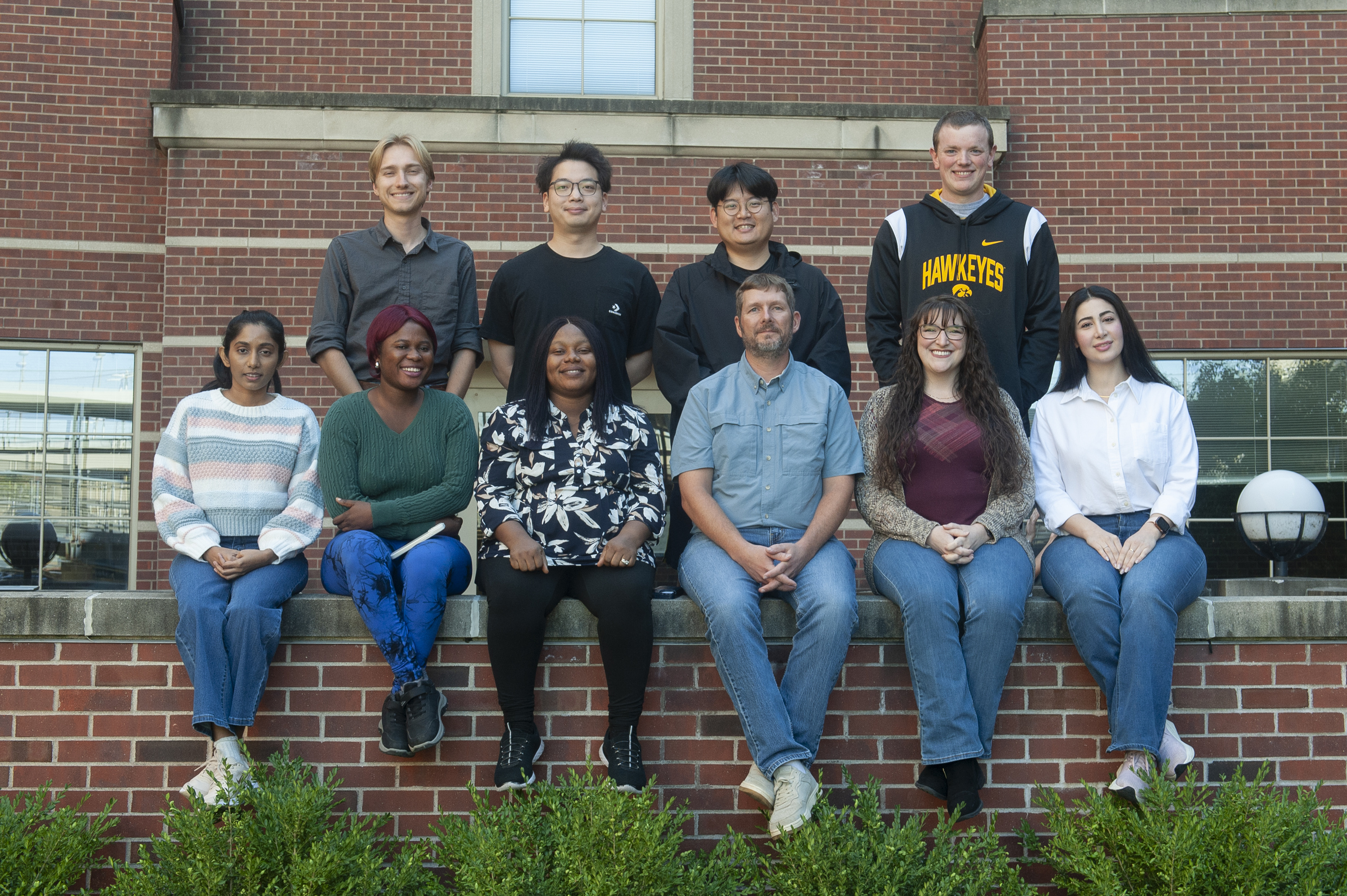
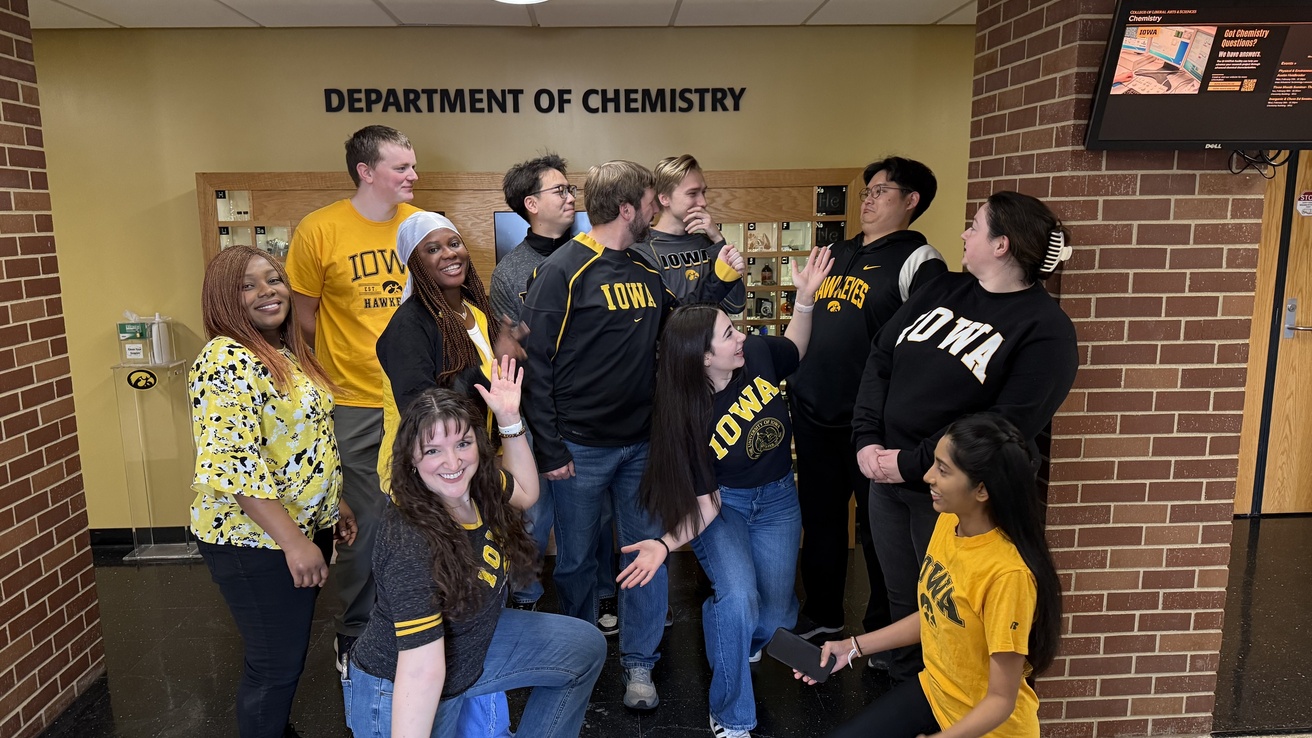
Grp photo 2025 Fall

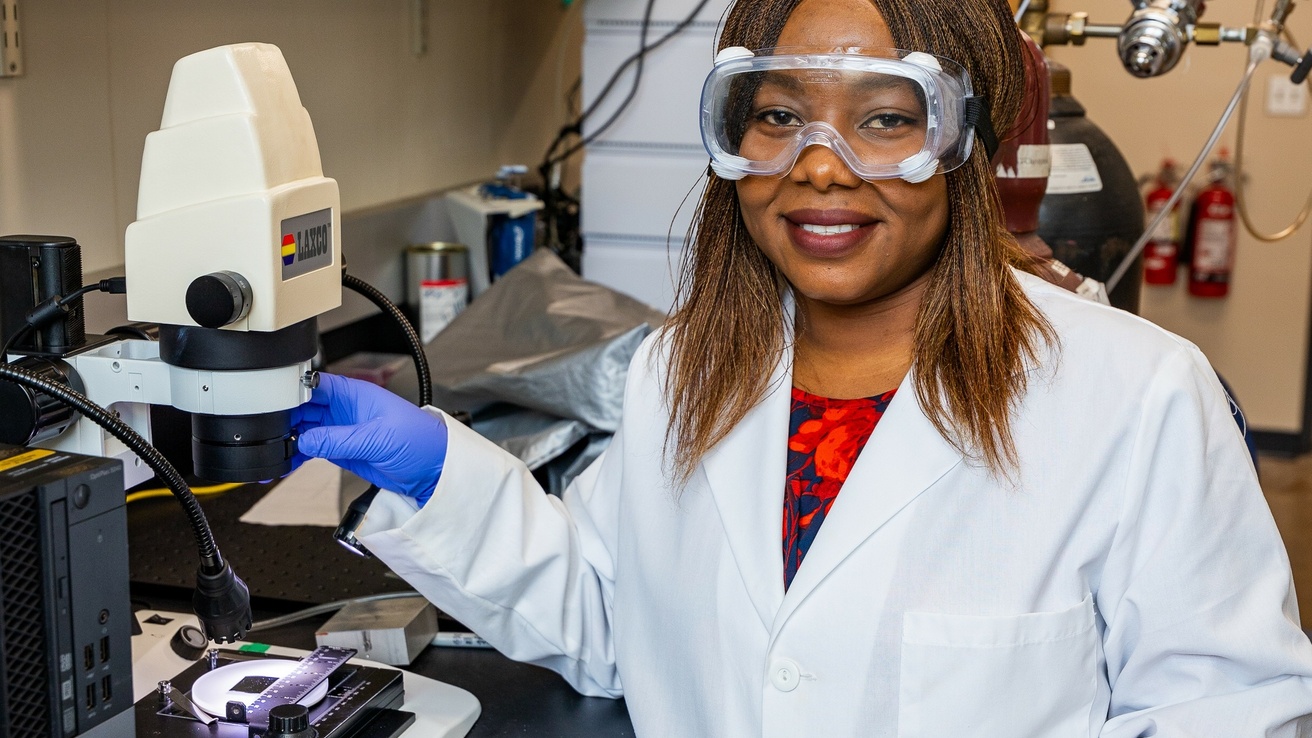
Our research focus can be summarized as analytical surface-science. Nearly all of our research is based on measurements of chemical interactions with surfaces, and most of our instrumentation is specifically designed to examine interfacial phenomena. If you've ever wondered why oil spreading on water looks like a rainbow, why you can only make sand castles with wet sand, or how Rain-X® keeps your windshield so clean, you might be interested in our work. We use precice measurements of chemical behaviors to create new, fundamental understanding of these types of questions to address important challenges in environmental remediation, materials development, and energy science. 

Detailed descriptions of our research projects and some laboratory pictures can be found within this website.  If you have questions, feel free to send us an email or arrange a visit to our lab.  Follow us on Twitter @shawschem (group) or @shawchem (Prof Shaw)

Research for All

The Shaw group accepts that scientific advancement suffers without participation from all varied communities. We proactively engage all people regardless of status or ability. We acknowledge institutional challenges within the sciences, both for and against, certain groups of people. To counter this and provide clearer pathways to success, we work to create an inviting and enjoyable environment to do, and share, good science for all. Through formal training and informal interactions, we continuously strive to improve ourselves while advocating for each others’ success. We hope our efforts will support positive changes within our field.
 

Event and news feeds

Departmental Events

Colloquium- Alison Altman of Texas A&M University

Friday, May 1, 2026 3:30pm
Pappajohn Business Building

Title: "Gaining orbital control in f-element chemistry: informed design of new quantum systems"

Abstract: The chemistry of f-element based system is fundamentally distinct from that of metals in other regions of the Periodic table. Defined by valence electrons in f-orbitals—often considered core-like—f-elements have long been described within an ionic bonding framework. Recent advances in the synthesis of novel f-element compounds challenge this paradigm, revealing new opportunities for precise...

Three Month Seminar- Ecem Cilek (Carter/Forbes Groups)

Wednesday, May 6, 2026 12:30pm
Chemistry Building

Three Month Seminar- Clarence Peiris (Martin Group)

Thursday, May 7, 2026 12:30pm
Chemistry Building

"Limonoids as Chemical Tools to Investigate Neurodegenerative Diseases"

Colloquium- Cory Windorff of New Mexico State University

Friday, May 8, 2026 3:30pm
Pappajohn Business Building

"Exploring the Synthesis and Characterization of Hetero- and Homometallic Clusters"

Abstract: Understanding how metals communicate is critical for a fundamental understanding of the elements, as well as pioneering new materials and catalysts. The use of metal clusters also enables the in-depth study of the reduction-oxidation chemistry of these metals. Here, I will focus on the synthesis of hetero- and homometallic non-aqueous clusters featuring f-elements. Through the reaction of a piano stool...

Three Month Seminar- Henry O'Callaghan (Martin Group)

Tuesday, May 12, 2026 10:30am
Chemistry Building

"Photocatalytic Alkylation of Diamondoids via Direct Oxidation/Deprotonation"

View more events